
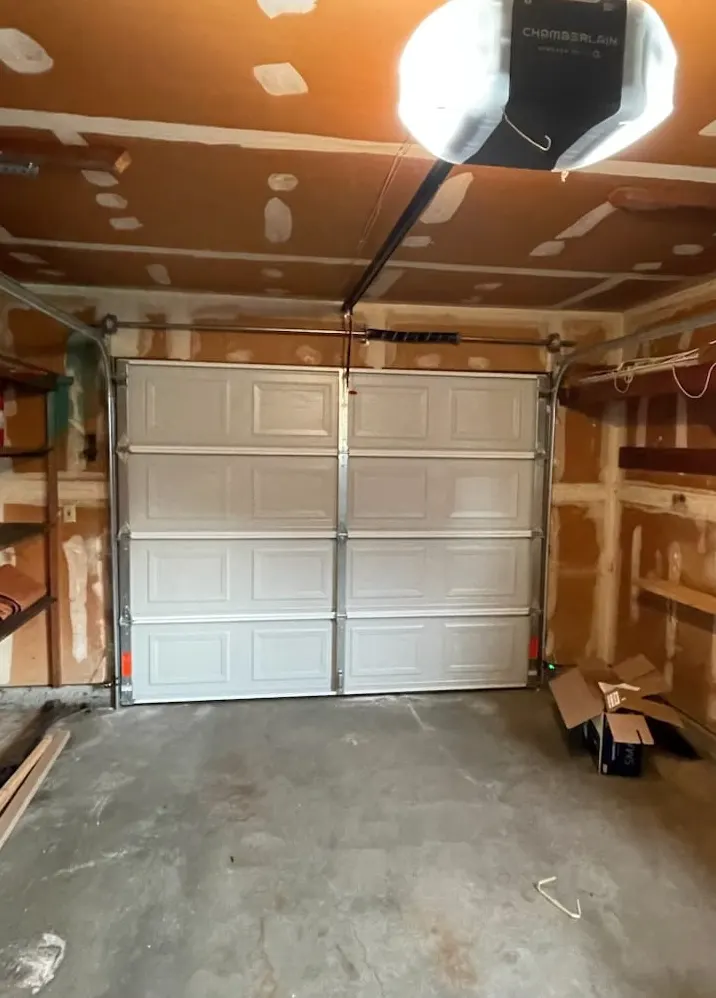
What a Technician Hears on an Opener Call
On most service calls around here, the complaint starts the same way: "It's gotten so loud" or "it used to be quiet." Nine times out of ten, the opener is an older chain-drive unit that's been running in a hot, humid garage for years. The chain has stretched, the rail is dry, and the motor is straining against a door that's picked up extra weight from humidity-swollen panels. By the time we're called out, the homeowner usually wants to know if it's worth repairing or if a different type of opener would solve the noise problem for good. That's a fair question, because the four main opener types handle noise, cost, and long-term durability very differently — and the right pick depends on how the garage connects to the rest of the house.
Chain Drive
Chain-drive openers use a metal chain to pull the trolley along the rail. They're the most common type because they're affordable and built to handle heavy doors, including the thicker, wind-rated doors many homes here use for storm protection.
- Noise: The loudest of the four. Metal-on-metal contact transmits vibration through the rail and ceiling joists — noticeable if the garage sits under a bedroom or living space.
- Price: Lowest upfront cost, typically the most budget-friendly option in national price ranges.
- Lifespan: Solid, often 10-15 years, but chains stretch and need periodic tensioning, and humidity accelerates surface rust if the chain isn't kept lubricated.
Belt Drive
Belt drives use a reinforced rubber belt instead of a chain, running over the same basic rail-and-trolley system.
- Noise: Quiet — the belt absorbs vibration, making it the preferred choice for attached garages or rooms above the garage.
- Price: A step up from chain drive, generally mid-range.
- Lifespan: Comparable to chain drives, and belts don't rust, which is a real advantage in salt-air or high-humidity environments. They can wear faster under extreme heat if the garage isn't ventilated.
Screw Drive
Screw-drive openers move the trolley along a threaded steel rod instead of a chain or belt.
- Noise: Moderate — fewer moving parts than a chain, but the motor itself can be louder.
- Price: Similar to belt drives.
- Lifespan: Fewer parts means less to break, but the rod needs regular lubrication. In a non-climate-controlled garage, temperature swings between hot afternoons and cooler nights can affect how smoothly the mechanism runs, sometimes causing speed inconsistencies.
Direct Drive
Direct-drive openers have a stationary chain or belt; the motor itself travels along the rail. There's no trolley pulling against tension.
- Noise: The quietest option by design, since the motor's weight dampens vibration instead of transmitting it.
- Price: Usually the highest upfront investment of the four.
- Lifespan: Simpler mechanics typically mean less maintenance and strong long-term durability, which can offset the higher initial cost over time.
What Makes Sense for a Typical Home Here
For a detached garage set away from living space, a chain drive still does the job reliably and keeps costs down — just plan on more frequent lubrication given the humidity. For an attached garage, especially one below a bedroom or home office, belt or direct drive openers are worth the extra cost simply for the noise reduction. If the garage sees a lot of temperature swings or sits unconditioned through summer heat, belt drives tend to hold up better than screw drives because they're not as sensitive to lubrication lapses. Whatever type you choose, make sure the opener's horsepower and reinforcement match the weight of your door — this matters even more if your door was selected or reinforced to meet wind-load requirements, since those doors are often heavier than standard panels.
When to Call Nichols Door & Opener
If your opener has gotten noticeably louder, struggles to lift the door smoothly, or you're planning a door replacement and want to pick a system that matches it, that's a good time to have it looked at. We handle Garage Door Opener Installation for all four drive types and can pair that with a Garage Door Maintenance & Tune-Up to check rollers, cables, and hardware that often wear out around the same time as an aging opener.
Give Nichols Door & Opener a call if you're weighing your options — we'll walk your garage, look at the door you have, and recommend an opener built for how your home actually sits, right here in Nichols, FL.