
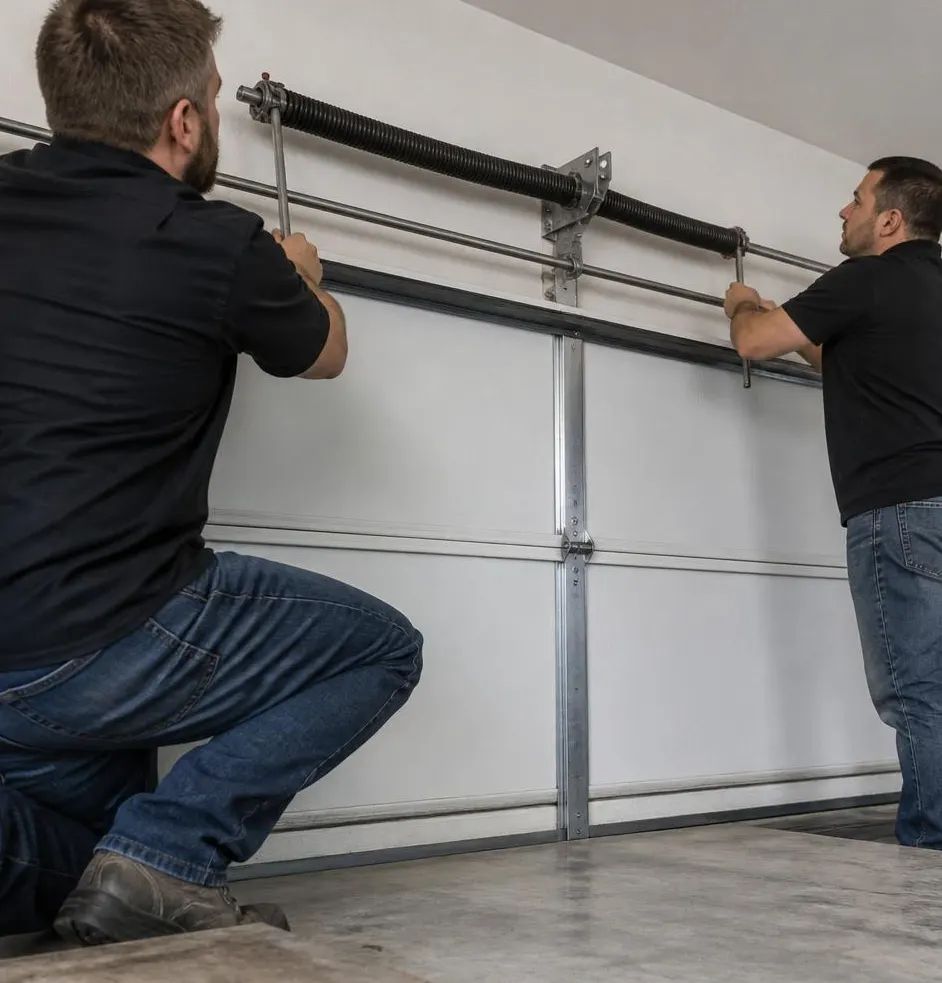
Torsion or Extension Springs Wearing Out? Here's the Rule of Thumb
A garage door spring that's about to fail almost always gives you weeks of warning signs before it actually breaks. That's the rule of thumb. The exceptions matter, though: springs that have rusted from humidity or salt air can lose strength invisibly, and a spring near the end of its rated cycle count can snap abruptly even if the door seemed fine the day before. In Polk County, where afternoon humidity and hurricane-season moisture are part of daily life, corrosion often hides wear that would otherwise be obvious. That's why a hands-on check matters more than just listening for noise.
Grab a flashlight and walk through this checklist in your own garage. Each item tells you what to look for and what it means if something's off.
1. Look for a Visible Gap in the Torsion Spring Coils
Torsion springs sit on a shaft above the closed door. Run your eyes along the coils — a gap or separation between coils, even a small one, means the spring has already stretched past its working tension. This is one of the clearest signs a torsion spring is failing, and it's often visible well before any noise or performance change shows up.
2. Check for Rust or Pitting on the Spring Coils
Humidity and salt air cause oxidation that weakens steel from the outside in. Surface rust on a spring isn't just cosmetic — pitted or flaking coils have lost tensile strength and are more prone to snapping under load, especially during the stress of a quick open-close cycle before a storm. If you see orange discoloration or flaking metal, treat it as a warning sign, not a maintenance afterthought.
3. Do the Manual Balance Test
Disconnect the opener (pull the red release cord) and lift the door by hand halfway. A balanced door with healthy springs will hold that position on its own. If it drifts down or shoots up, the springs are no longer carrying their share of the door's weight. This test works for both torsion and extension spring setups and is one of the most reliable DIY indicators available.
4. Listen to the Opener Motor
If the opener sounds like it's straining — a labored hum, a slower-than-usual travel time, or the door moving in visible jerks rather than one smooth motion — the springs are likely compensating poorly for lost tension, forcing the motor to do work it wasn't designed for. This also shortens opener lifespan, so it's not a symptom to ignore even if the door still technically opens.
5. Inspect Extension Springs for Stretching or Frayed Safety Cables
If your garage uses extension springs (the kind that run along the horizontal tracks on either side of the door, rather than above it), check for visible stretching beyond their coiled length and make sure the safety cables running through the center of each spring are intact. A frayed or missing safety cable is a serious hazard — if the spring snaps, the cable is the only thing stopping it from becoming a projectile.
6. Watch for Uneven Movement or Tilting
If one side of the door appears to open faster than the other, or the door tilts visibly as it travels, one spring (or one side of a torsion system) is likely weaker than the other. Springs are usually replaced in pairs for exactly this reason — uneven wear puts extra strain on rollers, cables, and tracks, accelerating wear across the whole system.
7. Note Any Loud Bang or Popping Sound
A sharp bang from the garage, even if the door still closes afterward, often means a spring has already partially failed or shifted on its shaft. Don't wait for a second event. Treat a bang as your cue to stop using the opener and have the system inspected before full failure happens, often with no warning, at the least convenient moment.
8. Consider the Spring's Age and Cycle Count
Most torsion springs are rated for a set number of open-close cycles — commonly in the 10,000 cycle range for standard-duty springs, though heavier doors built to meet wind-load requirements often use higher-cycle springs. If you don't know when your springs were last replaced and the door sees daily use, age alone is a reason to have them checked, independent of any visible symptoms.
9. Factor in Local Conditions
Doors built or reinforced for hurricane-season wind-load rules tend to be heavier, which means the springs supporting them work harder on every cycle. Combine that with swelling wood or metal components from humidity and the occasional salt air exposure for homes closer to the coast, and springs in this part of Florida often wear faster than the same hardware would in a drier, more temperate climate.
When to Call Nichols Door & Opener
If your balance test fails, you spot coil separation or rust pitting, or the opener is clearly straining, it's time to call in a professional rather than keep testing the door yourself — a loaded spring under tension is not something to troubleshoot solo. Nichols Door & Opener handles Garage Door Spring Repair for both torsion and extension systems, replacing worn springs in matched pairs and checking the full balance of the door afterward. If your springs are sound but it's just been a while since anyone looked at the hardware, our Garage Door Maintenance & Tune-Up service covers spring tension, cables, rollers, and opener performance in one visit, which is especially useful heading into storm season when a reliable, well-balanced door matters most.
If you're noticing any of these signs in Nichols, Bartow, Mulberry, or anywhere else we serve across Polk County, give us a call before a worn spring turns into an emergency repair.